WHAT THEY ARE
A fungus and an alga
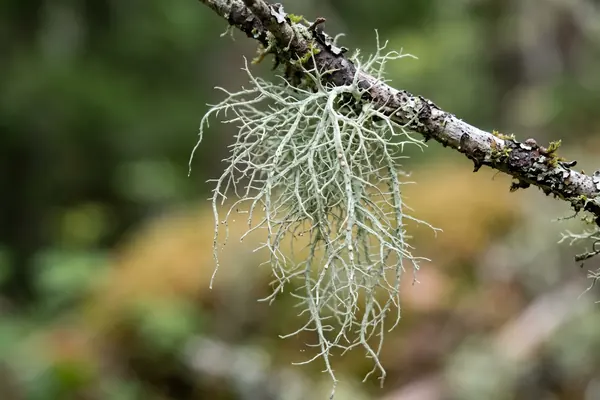
A lichen is a partnership: the fungus gives structure and protection, and the alga makes food by photosynthesis.
Read the bark thelcl
Start
AN INFORMATIONAL GUIDE: LICHEN CHECK LIST
Lichens take their food straight from the air.
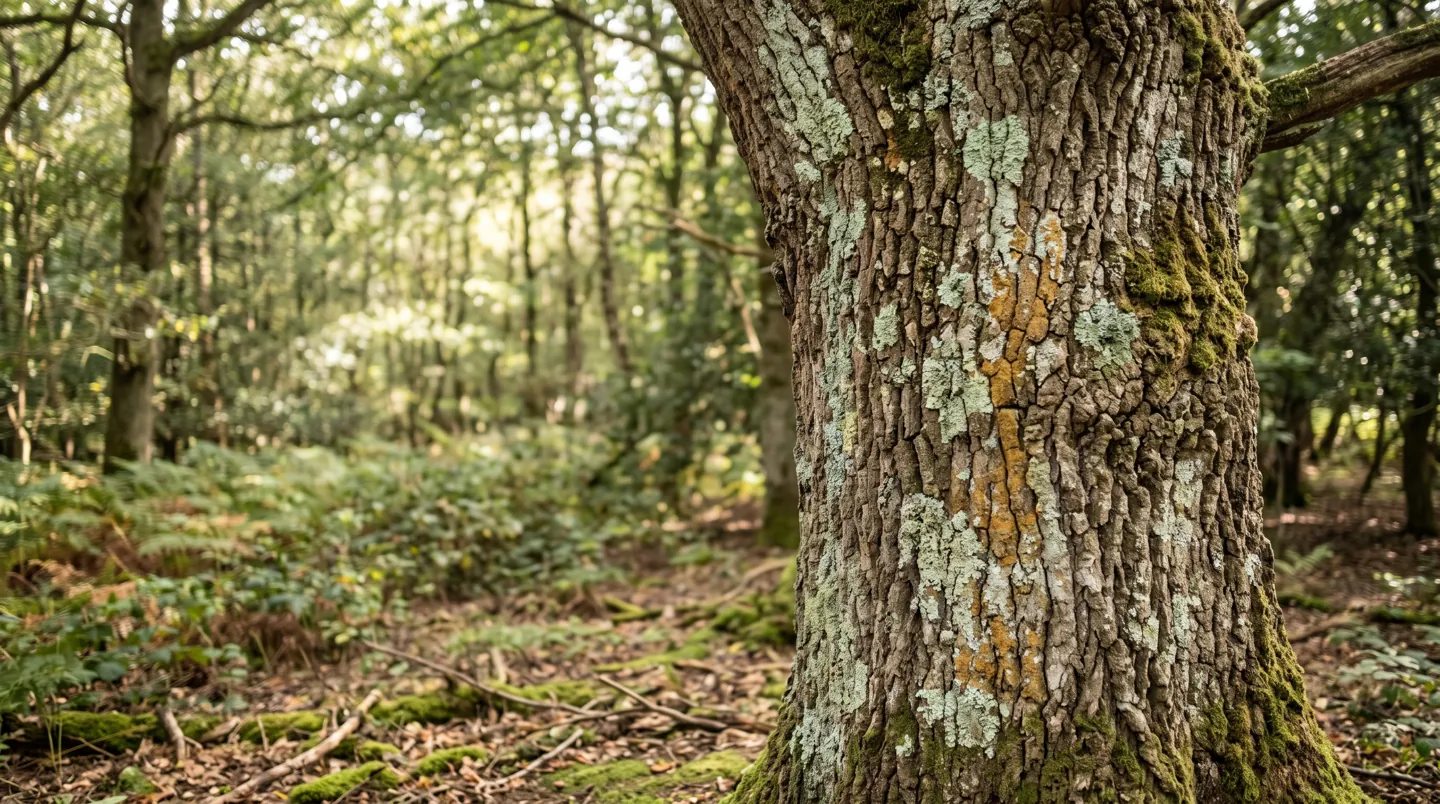
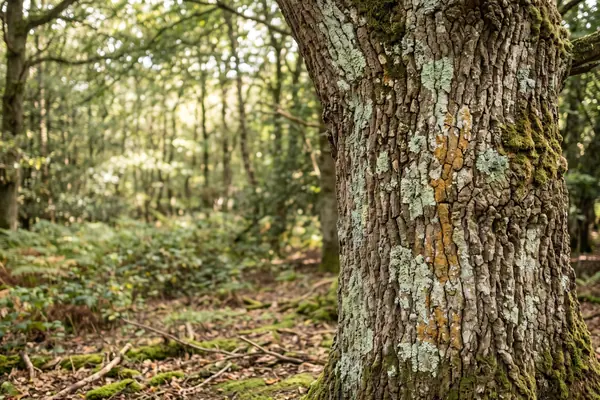
Here LCL stands for lichen check list: this is an independent informational guide, not an organisation. Because lichens have no roots, the ones growing on a tree trunk say a lot about the air around it, especially nitrogen pollution.
LOOK CLOSER1 to 1.5 m up
Read the barkKeep in mind
THE SHORT ANSWER
Lichens have been used as indicators of air quality
in Europe for more than a century.
WHAT THEY ARE
A lichen is a partnership: the fungus gives structure and protection, and the alga makes food by photosynthesis.
Read the barkTHE SIGNAL
As nitrogen pollution rises, nitrogen-sensitive lichens decline and nitrogen-tolerant ones increase, so the mix tells a story.
See the numbersTHE CAUSE
Oxides of nitrogen come mostly from combustion and vehicles; ammonia mainly from farming, including livestock and fertilisers.
Try a surveyREAD THE BARK
Pick what you see. The bar shows how strongly it points to cleaner air for nitrogen, going by UK survey guidance.
Based on the APIS guide to a lichen-based nitrogen air quality index (CEH, Natural History Museum and University of Nottingham) and the OPAL Air Survey. Indicators, not a measurement.
TWO NUMBERS WORTH KNOWING
Both figures come from the OPAL Air Survey
run by Imperial College London scientists.
15,000+
Trees checked for lichens
Over 5,980 survey responses were sent in, including lichens on over 15,000 trees and tar spots on over 24,000 sycamore leaves.
CITIZEN SCIENCE · OPAL
9
Lichen types recorded in the survey
The nine types were grouped as nitrogen-sensitive, nitrogen-tolerant or intermediate, giving a simple bioindicator for nitrogen pollutants.
LICHEN TYPES · OPAL
OPAL's analysis found the lichen-based index was significantly lower, meaning more nitrogen-loving lichens, where nitrogen pollution was increasing.
FIVE STEPS FROM THE FIELD GUIDE
These steps follow the APIS guide's method for oak or birch trees.
Step 1
Choose five or more oak or birch trees, not a mix, single-stemmed, over 40 cm round and free of ivy.
Step 2
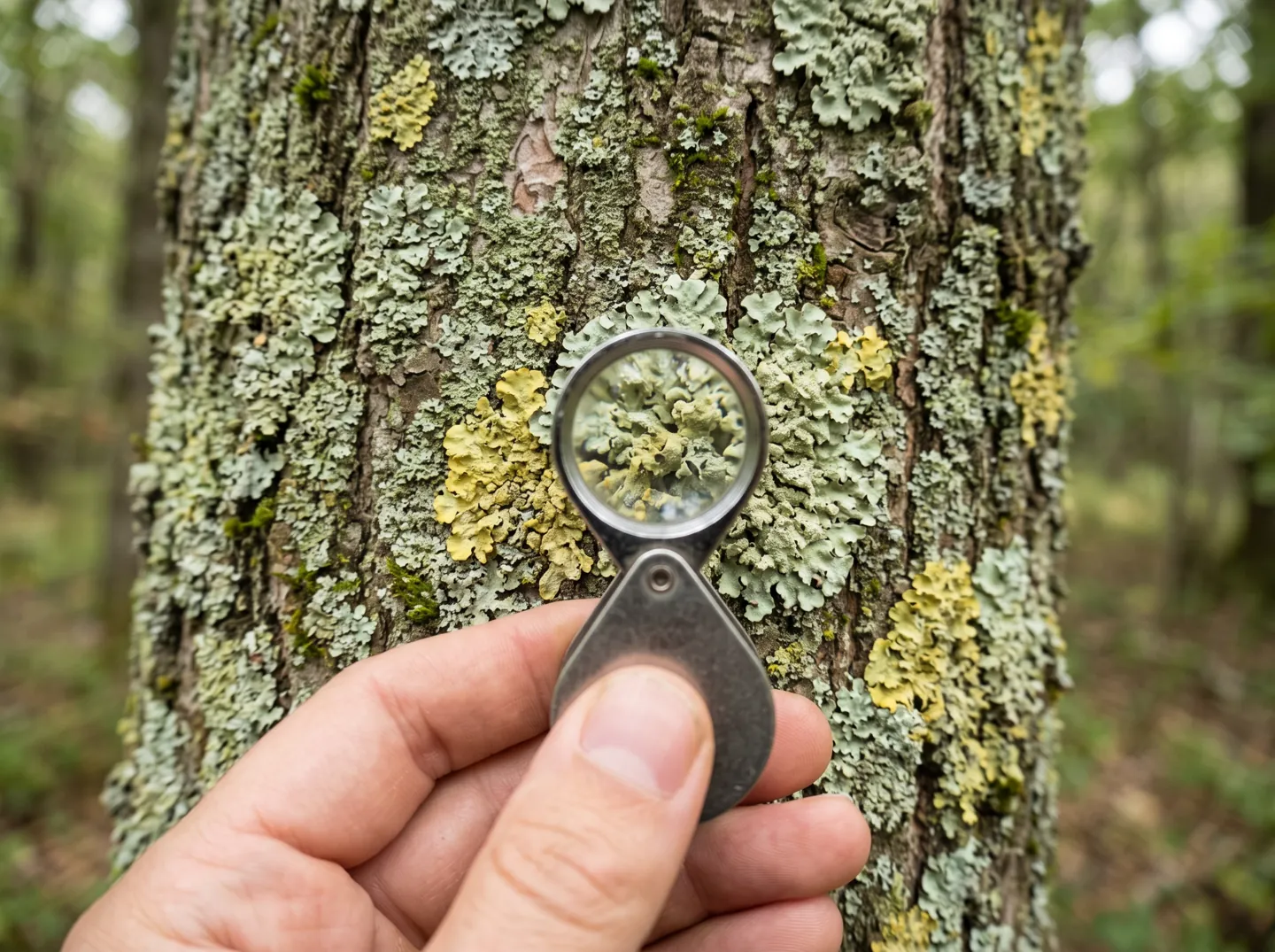
On the east, south and west of each trunk, check a 50 by 10 cm patch between 1 and 1.5 m above the ground.
Step 3
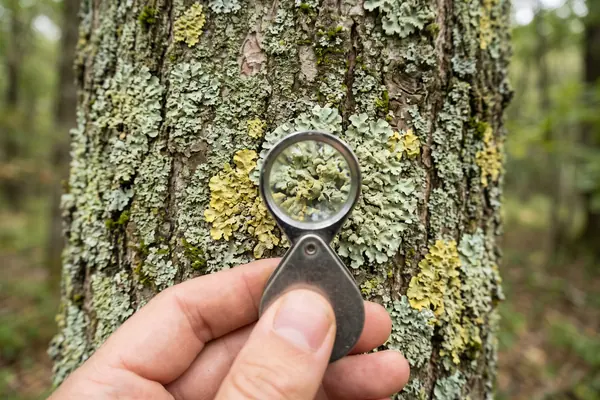
Record whether listed sensitive and tolerant lichens are present. A hand lens and a simple chemical test can help confirm tricky ones.
Step 4
Combine the counts across your trees and subtract the tolerant score from the sensitive score to get a single lichen indicator score.
Step 5
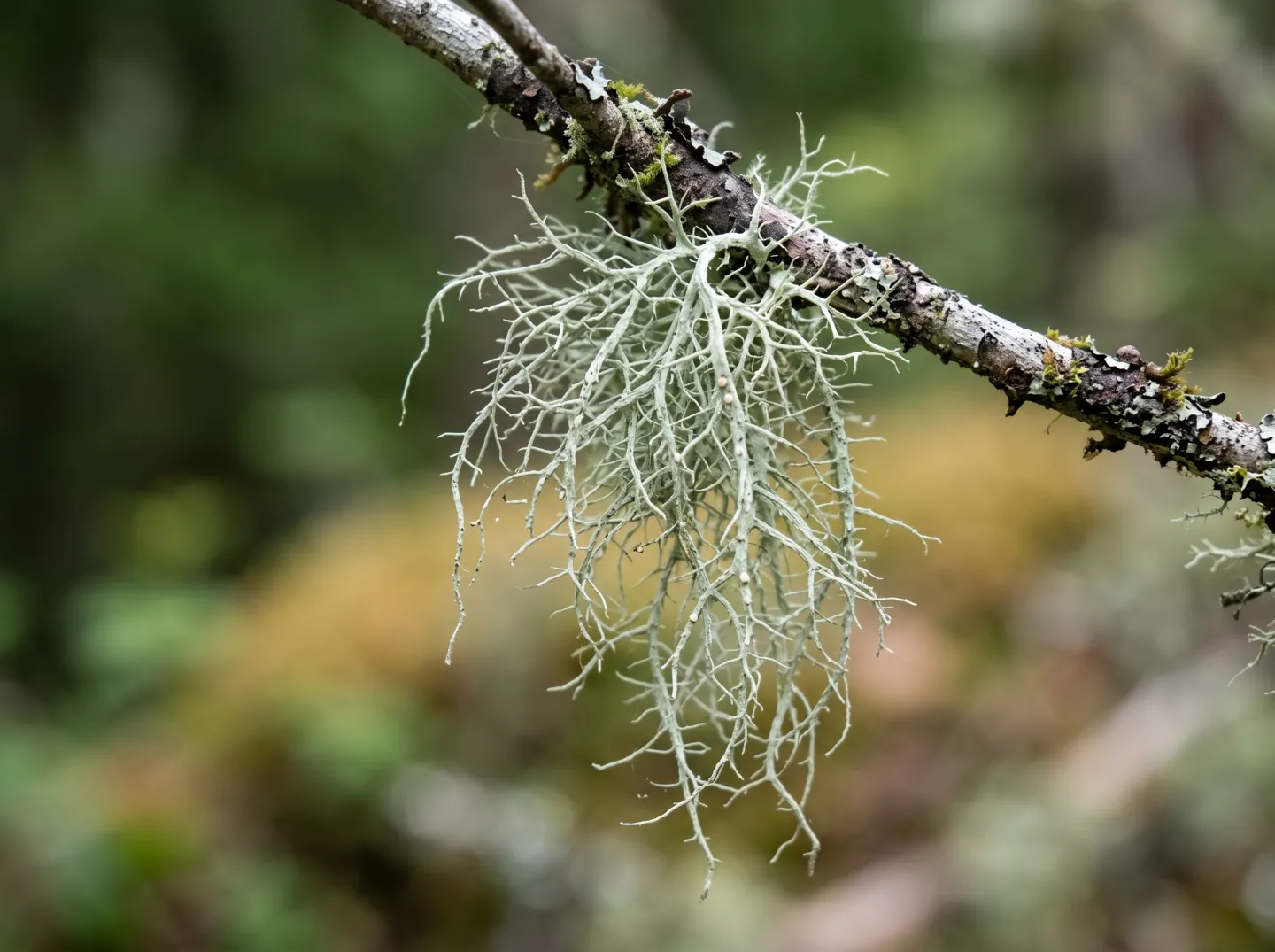
Survey 3 to 5 branches of the same tree species in three zones measured from the growing tip, and score them the same way. If the branches score lower than the trunks, conditions at the site are probably getting worse.
A CHANGING STORY
The APIS guide says sulphur dioxide was the main pollutant of concern in the 1970s and 1980s. After big cuts in sulphur emissions, the main threat to sensitive vegetation now comes from reactive nitrogen.
Imperial's 2009 OPAL launch noted that lichens became known as clean-air indicators when acid rain made them disappear, and that some now thrive on pollution while others are sensitive.
Questions
Lichen check list. This is an independent informational guide, not an organisation or survey scheme.
A partnership between a single species of fungus and one or more algae. The fungus provides structure and the alga provides energy through photosynthesis.
They have no roots and take their nutrients from the atmosphere, so they are highly susceptible to changes in air chemistry, says the APIS guide.
Mainly nitrogen: oxides of nitrogen from combustion and vehicles, and ammonia from farming. Tar spot on sycamore relates to sulphur dioxide.
No. The APIS method records only whether listed sensitive and tolerant indicator lichens are present, using easily recognised species.
In the APIS method the lichen indicator score runs from +3, where only nitrogen-sensitive lichens are present, to -3, where only nitrogen-tolerant ones are. A graph in the guide converts it into a nitrogen air quality index: 0 to 0.5 counts as clean, above 0.5 to 0.85 as at risk, 0.86 to 1.25 as nitrogen polluted and above 1.25 as very nitrogen polluted. Trunks and branches are read from separate lines on that graph.
The OPAL Air Survey tested two ideas: street cleaning removes the fallen leaves that are a source of the tar spot fungus, and nitrogen dioxide from road traffic reduces tar spot formation. An analysis of the survey (Gosling et al., 2016) found less tar spot where there were few fallen leaves, and a substantial fall once nitrogen dioxide rose above about 20 micrograms per cubic metre, so both ideas may be right.
The APIS guide uses it to help confirm some identifications. Scrape away a small part of the lichen's upper surface and put a small drop of fresh household bleach, such as Milton or a plain supermarket bleach without additives, on the paler layer beneath. A pink to red colour change, which may fade quickly, is a positive reaction. Carry the bleach in a labelled, leak-proof dropper bottle and keep it off skin and clothing.
Destination
ABOUT THIS NAME
thelcl.org is part of the DoodleSale portfolio. It isn't in an auction right now, but you can ask about leasing it.